In New Gloucester, Maine, is Sabbathday Lake Shaker Village, home to America’s oldest continuing religious community—the United Society of Believers, more commonly known as the Shakers. Founded in the 18th century, the Shakers built communities throughout New England, each centered on principles of simplicity, equality, and shared purpose. Today, the New Gloucester settlement is the last active Shaker community in the world.
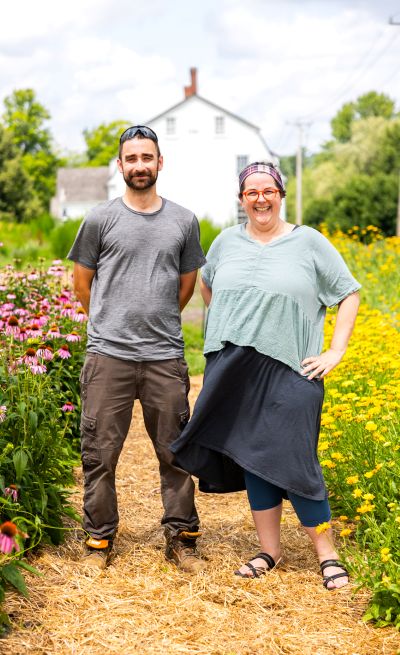
Supporting this legacy are Jamie and Tyler, employees of the nonprofit Friends of the Shakers, who work closely with the small Shaker community to preserve its history and sustain its land-based traditions. “We’re like Shaker-adjacent,” Jamie explains. “We’re definitely dedicated to this place—just not as much as they are. We’re really close though.”
Together, Jamie and Tyler tend the Shaker Village Garden, an expansive plot beside the original Meetinghouse. The Shakers have cultivated herbs here since 1799. “The garden has been planted every year since,” Tyler explains. The Shakers were early herbalists—they sold teas and medicines meant to help people feel well. “Today, we sell [our herbs] a lot more for culinary uses,” Tyler says, “but we’re still giving people the benefits. Like peppermint is tasty and good for your stomach.”
A horticulturist by training, Tyler first began helping at the village as a student and returned after college—he is now the head gardener and manager of garden volunteers. Jamie, a decade-long staff member and former volunteer, describes the village as a place she always felt drawn to. She always found the village to be a peaceful place, she says. “I was always asking: how can I be here more?”
Jamie and Tyler are crucial partners in the village’s daily operations, including the thriving herb and flower production. Volunteers and employees are responsible for maintaining and cultivating the Shaker Village Garden, which is an expansive plot of land next to the original Shaker Meetinghouse.
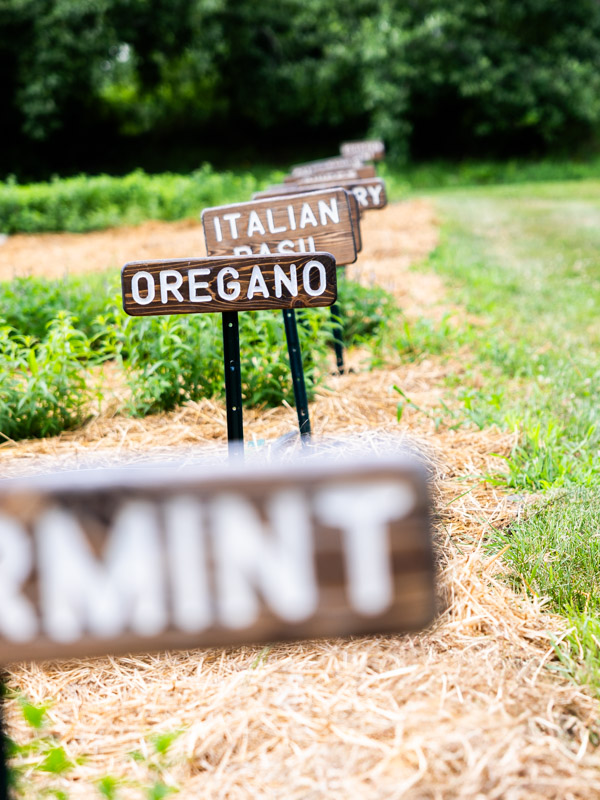
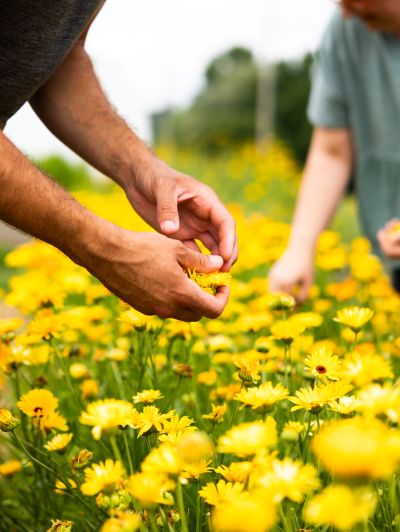
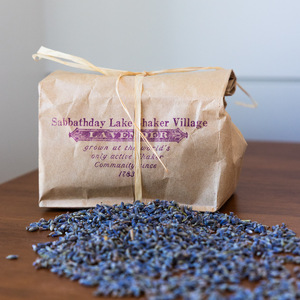
In the garden at the village, there is yarrow, echinacea, calendula, lavender, catnip, sage, spearmint, lemon balm, bee balm, dill, marjoram, and much more. Technique for harvesting these herbs has been consistent for centuries, with many hands tending to the garden in the spirit of the Shaker value of community.
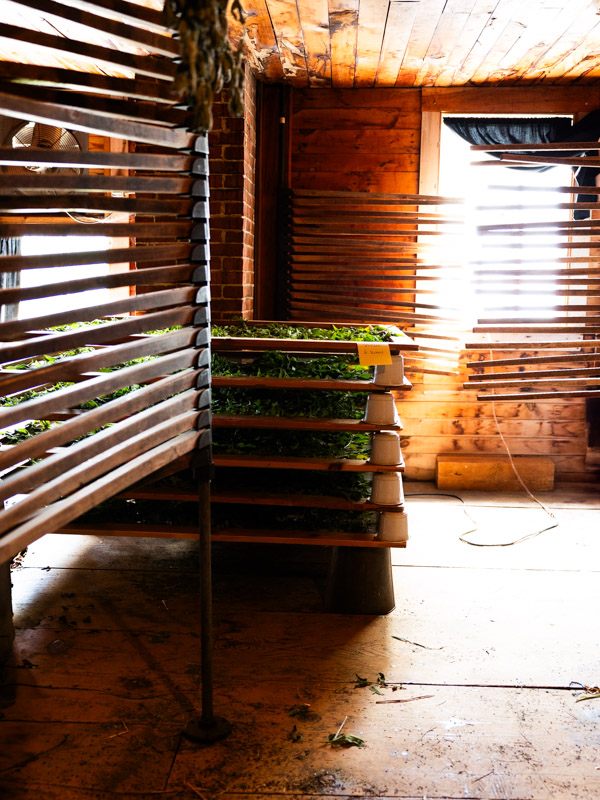
Each plant is carefully harvested by hand, then carried to the Herb House to dry. During renovations, the drying has temporarily moved to the historic Sisters’ Barn, where bundles of herbs hang from beams and rest on wire racks. On hot days, the attic fills with the rich scents of spearmint, lemon balm, and sage—a living link to centuries of Shaker handiwork.
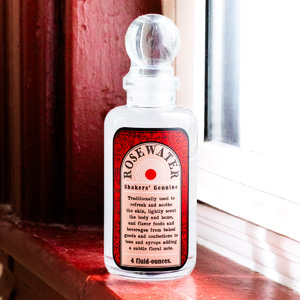
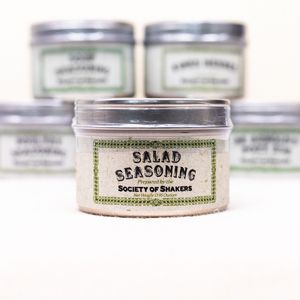
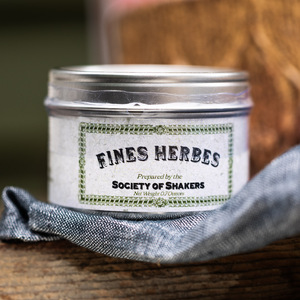
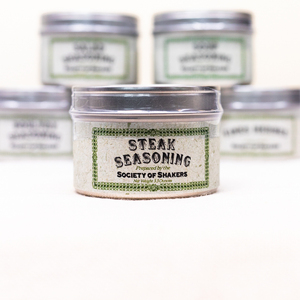
Downstairs, the completely dried herbs are assembled and distributed into various herbal and seasoning blends. They are stored in giant barrels, which are hand-scooped into tins for commerce. Rows of finished tins line the shelves on the walls. There is an impressive amount of the dried herbs, all grown in this historic garden.
“The experience is very, very grounding,” Tyler reflects. “We’re out in the forest as a group, working together, putting the herbs up in the attic. Everything is by hand.” According to Tyler, this traditional handiwork is important for people to reconnect with their senses and with each other.
Beyond their daily work, Jamie and Tyler help the community expand its impact through educational and inclusive programs. The village welcomes volunteers and participants of all abilities to join in workshops on gardening, fiber arts, and herbalism. “We’re about personal experience,” Jamie explains. “Getting people involved—helping them connect through the work.”
Jamie thinks of the work as crucial to both the Shakers’ and Maine’s vitality by linking the land with its past, rather than letting local agriculture disappear. “We’re about our present and about the future, but we’re also always looking at the past and working with it.”
Tyler agrees. “We connect Shaker values and beliefs to the outside community,” he says. “We’re showing people what we can accomplish when we work together—something that this culture has been doing for hundreds of years.”